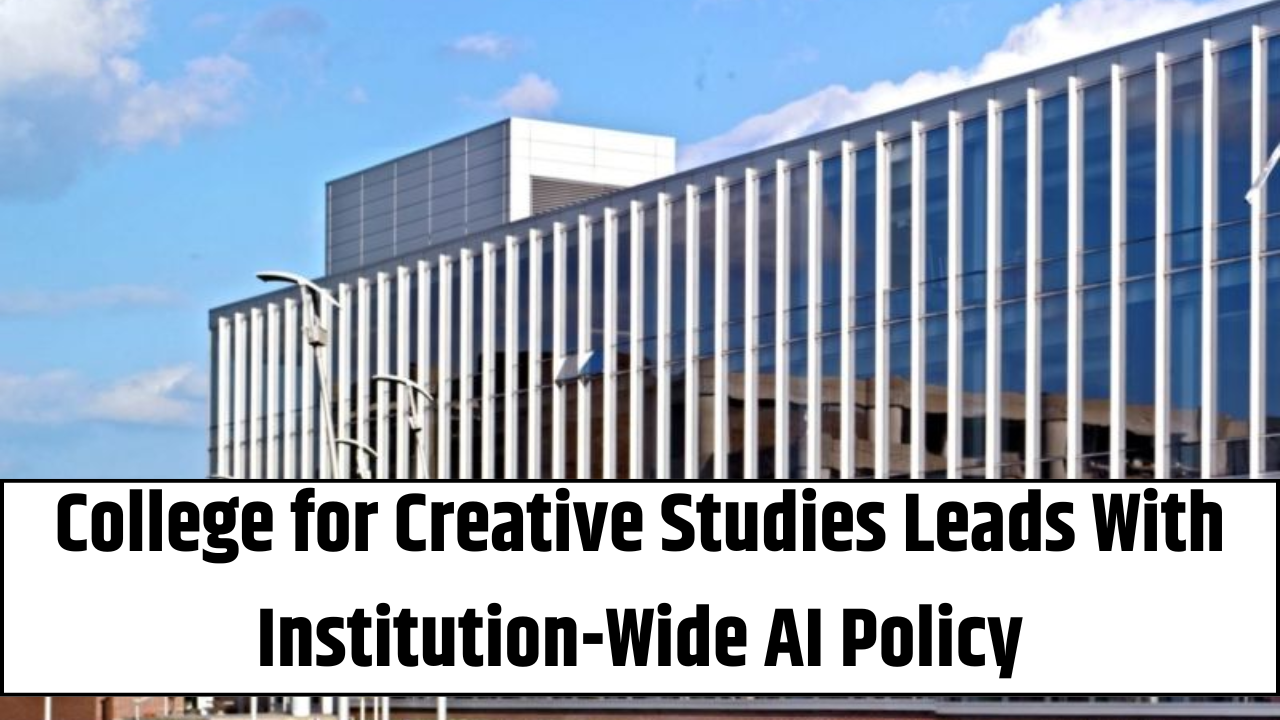
As artificial intelligence rapidly reshapes creative industries, art and design schools across the country are grappling with how to respond. The speed and scale of AI’s capabilities—particularly generative tools—have raised difficult questions about authorship, originality, ethics, and the future of creative education. Addressing those concerns head-on, the College for Creative Studies (CCS) has taken a leading role.
CCS has become the first member institution of the Association of Independent Colleges of Art and Design (AICAD) in the United States to establish and implement a campus-wide artificial intelligence policy. Rather than resisting AI outright or allowing unrestricted use, the College has chosen a balanced approach that defines how AI can support learning without undermining artistic development.
Balancing Innovation With Creative Integrity
Tim Flattery, Provost and Vice President for Academic Affairs, has spent more than three decades working as a concept artist and designer in the entertainment industry. Having witnessed multiple waves of technological change, he quickly recognized that generative AI posed a fundamentally different challenge.
According to Flattery, AI tools can bypass the creative process by producing polished outcomes without requiring skill-building, experimentation, or critical thinking—elements that sit at the heart of art and design education. He also pointed to ethical concerns surrounding AI systems trained on the work of artists and writers without consent.
Recognizing the urgency, Flattery brought the issue to CCS leadership, urging the institution to define clear boundaries for AI use that would preserve creative rigor while allowing responsible exploration of emerging tools.
A Yearlong, College-Wide Effort
Rather than rushing to judgment, CCS invested a full year into research, dialogue, and collaboration. An AI task force—made up of faculty, staff, students, and department chairs—was formed to examine how artificial intelligence should function within the College’s academic environment.
What began as a focused working group expanded into a campus-wide consultation process that included surveys and conversations across disciplines, as well as engagement with industry partners. The result was an institutional policy designed to reflect diverse perspectives while maintaining consistent standards.
Clear Guidance for Classrooms and Curriculum
The policy establishes firm expectations around academic integrity, classroom use, and final project submissions. Faculty are empowered to guide AI usage within their courses, ensuring students understand when AI is appropriate and when it is not.
Paul Snyder, Chair of the Transportation Design department and a member of the AI working group, emphasized that the policy is designed to enhance—not restrict—learning. By setting defined parameters, students remain focused on developing foundational skills while gaining awareness of the technologies they will encounter professionally.
Discipline-Specific Flexibility
Recognizing that AI affects creative fields in different ways, CCS asked individual program chairs to develop department-specific guidelines aligned with the broader institutional framework. This approach allows each discipline to account for its unique processes, tools, and professional expectations.
Becca Pad, Library Director and co-chair of the AI working group, noted that collaboration across departments was essential. She said the collective effort resulted in guidance that supports students, faculty, and staff as they navigate a rapidly evolving creative landscape.
Protecting Student Work and Intellectual Property
At the core of the policy is a commitment to safeguarding student creativity and authorship. The guidelines emphasize that AI is a tool for exploration, research, and process—not a substitute for original work.
Key principles include:
- Instructor approval is required for AI use, and AI-generated outputs may not be submitted as final work unless explicitly permitted.
- Students must disclose AI tools and document prompts used during research or ideation.
- Referencing specific artists, designers, brands, or companies in prompts is prohibited unless approved.
- Instructors must ensure equitable access to AI tools for all students.
Admissions policies also reflect these values. Applicants may only use AI for research or ideation, not for final portfolio pieces, and strict limits apply to AI-assisted submissions.
A Living Policy for a Changing Technology
CCS leadership has been clear that the policy is not static. As AI tools evolve, so too will the College’s guidelines. Ongoing review and dialogue are built into the framework to ensure relevance and effectiveness.
Ashlei Watson, Director of Academic Planning and Effectiveness and co-chair of the AI working group, said the College plans to continue engaging the community through forums and discussions. The working group will also evaluate AI tools for potential institution-wide access, ensuring students and faculty have vetted resources available.
Preparing Students for an AI-Influenced Future
To ensure students are equipped to navigate these changes, CCS has integrated foundational AI education into its curriculum. First-year students are introduced to artificial intelligence concepts through a required Digital Techniques course, helping them develop digital literacy early in their academic journey.
The College believes early exposure allows students to critically assess AI’s role in creative practice rather than adopting it uncritically later in their careers.
Leading the Conversation in Creative Education
CCS leaders agree that artificial intelligence will profoundly influence visual culture and creative industries worldwide. By addressing AI directly and thoughtfully, the College positions itself at the forefront of responsible creative education.
As Snyder noted, AI is already challenging long-held ideas about creativity, originality, and human expression. Institutions responsible for shaping culture, he said, have an obligation to engage with those challenges critically.
Through its comprehensive AI policy, CCS is doing exactly that—setting standards, protecting artists, and preparing students for a future where technology and creativity must coexist responsibly.