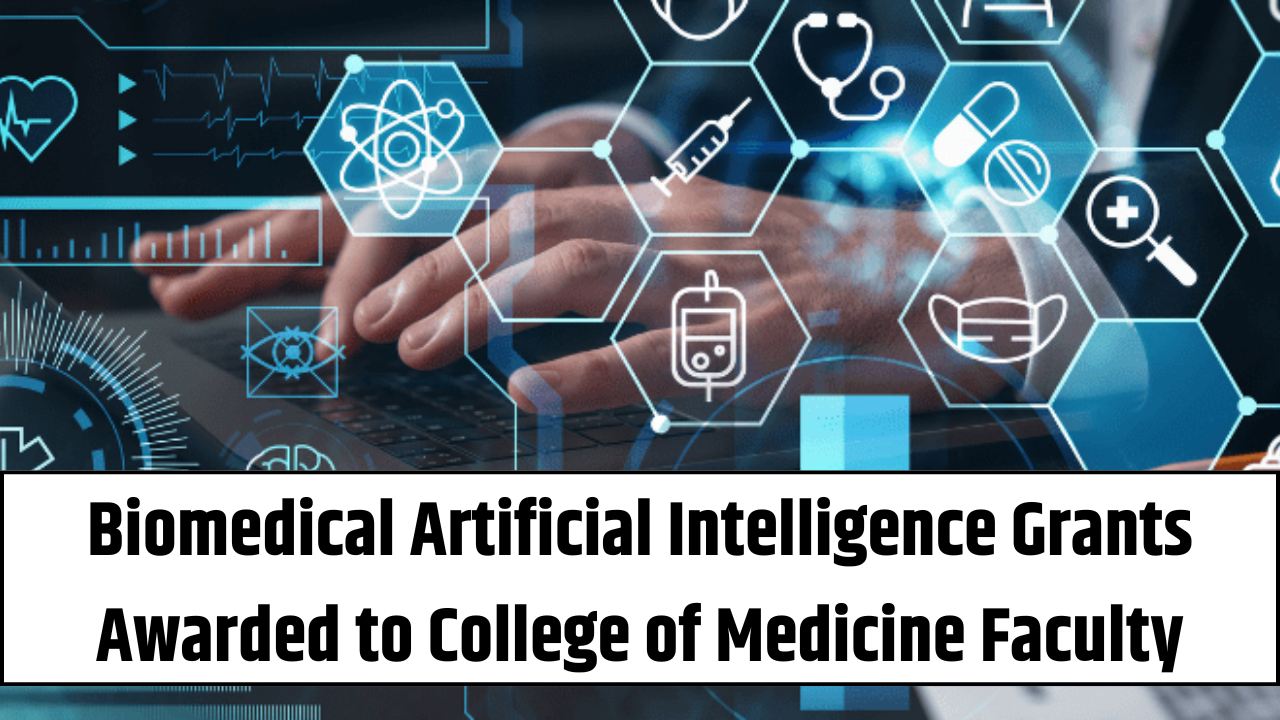
HERSHEY, Pennsylvania — Leaders at Penn State College of Medicine have awarded $225,000 in pilot funding to support research aligned with Goal Two of the college’s strategic plan, which focuses on artificial intelligence (AI) and biomedical informatics.
The initiative will support nine investigators who plan to use advanced approaches in AI, machine learning, and informatics to speed discoveries in biomedical research and tackle pressing health challenges.
“Artificial intelligence and biomedical informatics are transforming biology and medicine,” said Dajiang Liu, who leads Goal Two of the strategic plan. “Our faculty proposed innovative projects that apply these tools to uncover meaningful patterns in large datasets—work that can lead to new therapies, diagnostics, and preventive strategies.”
Turning early ideas into funded research
The seed awards are designed to help researchers mature early-stage ideas into competitive proposals for external funding from the National Institutes of Health and other major sponsors. The longer-term aim is to translate discoveries into measurable improvements in health and health care for the diverse communities served by Penn State Health.
“Machine learning and artificial intelligence can dramatically improve both the speed and accuracy of life-saving discoveries,” said interim dean Kevin Black. “These funds allow our faculty to explore bold ideas and reshape how we use leading-edge technology in health research.”
Catalyst Awards
A Collaborative Study on Treatment Guideline Concordance in Mood Disorders
- Investigator: Guodong Liu, professor of public health sciences; psychiatry and behavioral health; neurology; pediatrics
- Award: $10,000
- Aim: Assess the feasibility of using large medical insurance claims databases and machine-learning methods to evaluate adherence to clinical guidelines in treating bipolar disorder and major depressive disorder.
Mapping Post-Transcriptional Modifications in Human Extracellular microRNAs
- Investigator: Jian Wang, assistant professor of pharmacology
- Award: $10,000
- Aim: Develop a machine-learning bioinformatics tool to study microRNA modifications, with potential use as disease biomarkers.
Machine-Learning Analysis of Thyroid Mass CT Imaging
- Investigator: Neerav Goyal, associate professor and vice chair for research, Otolaryngology—Head and Neck Surgery; associate professor of neurosurgery and public health sciences
- Award: $10,000
- Aim: Create algorithms to distinguish benign from malignant thyroid masses on CT scans, potentially reducing unnecessary testing.
Additional Catalyst Awards
- Personalized Deep Learning for Pancreatic Cancer Risk Assessment and Diagnosis
- Investigator: Nelson Shu-Sang Yee — $10,000
- Using Routine Blood Tests to Identify People at High Risk of Cancer
- Investigator: Roderick Clark — $10,000
Collaborative Pilot Awards
Micro-Doppler Signatures and Injury Risk in Athletes
- Investigator: Cayce Onks, associate professor of family and community medicine; orthopaedics and rehabilitation
- Award: $50,000
- Aim: Examine whether micro-Doppler radar can identify athletes at elevated risk for musculoskeletal injuries.
COVID-19 and Kidney Disease: Evidence from Real-World Data
- Investigator: Djibril Ba, PhD, assistant professor of public health sciences
- Award: $50,000
- Aim: Use large datasets and machine learning to evaluate how COVID-19 affects the risk of acute kidney injury and chronic kidney disease.
AI-Assisted Image Analysis for Osteoarthritis Clinical Studies
- Investigator: Fadia Kamal, associate professor of orthopaedics and rehabilitation; pharmacology
- Award: $50,000
- Aim: Apply AI to read X-rays with greater accuracy and test whether the antidepressant paroxetine may act as a disease-modifying osteoarthritis drug.
AI-Based Medical Image Segmentation for 3D Surgical Planning
- Investigator: Gregory Lewis, associate professor of orthopaedics and rehabilitation; biomedical engineering
- Award: $25,000 (plus additional funding from a Center for Biodevices seed grant)
- Aim: Use deep-learning algorithms to segment CT images and generate patient-specific 3D models for tailored surgical planning.
With these strategic investments, Penn State College of Medicine aims to accelerate the integration of AI into medical research and move technological advances more quickly into clinical practice—delivering tangible benefits for public health.