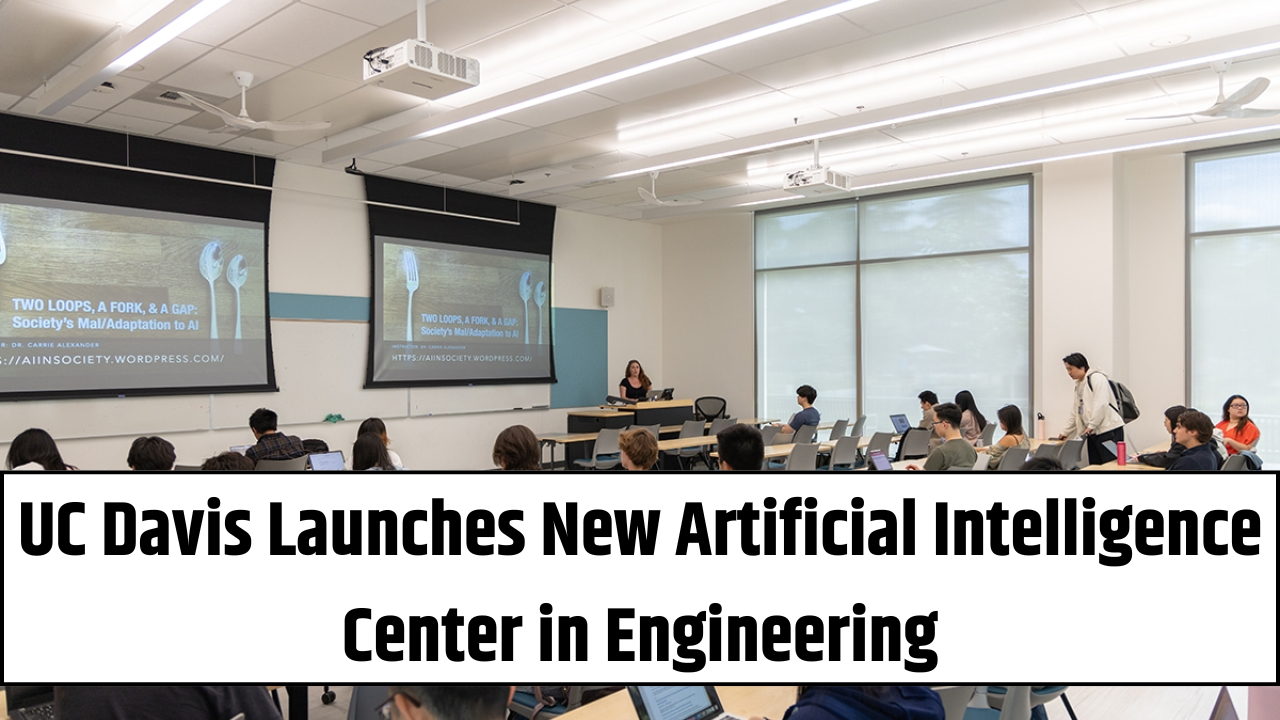
The University of California, Davis College of Engineering has launched a new AI Center in Engineering, aimed at advancing artificial intelligence research while prioritizing benefits for humanity and the planet.
The center will support foundational AI research, real-world applications and educational initiatives designed to address pressing global challenges. University leaders say the new hub will serve as a catalyst for collaboration across disciplines and sectors.
“College of Engineering faculty have long been leaders in artificial intelligence research and education,” said Dean Richard L. Corsi. “This center will amplify those efforts and advance our mission to develop engineering solutions and accessible technologies that improve quality of life.”
Leadership and Collaborative Vision
The center is led by Raissa M. D’Souza, associate dean for research and professor of computer science and mechanical and aerospace engineering, alongside co-director Dipak Ghosal, Bucher Family Chair and professor of computer science.
Faculty representatives from all eight academic departments within the College of Engineering will serve on an advisory board to guide the center’s growth and long-term strategy.
Collaboration is central to the center’s mission. Research efforts will span 10 key focus areas and involve partnerships across UC Davis, as well as with industry leaders and policymakers.
“AI is transforming the world at lightning speed,” D’Souza said. “Our goal is to accelerate innovation while keeping the needs of people and the planet at the forefront.”
Research, Education and Entrepreneurship
Foundational AI research will be a cornerstone of the center, alongside applied projects aligned with UC Davis initiatives such as Grand Challenges, the Center for AI and Experimental Futures, the AI Institute for Next Generation Food Systems and DataLab.
On the education side, the center will launch Artificial Intelligence for All, a new course offering a broad introduction to AI while exploring its ethical and societal implications. Additional courses, online degrees and certificate programs are expected as collaborations expand.
“The AI Center in Engineering will foster new educational initiatives, incubate innovation and accelerate entrepreneurship,” Ghosal said, noting the center’s strong focus on translating research into real-world impact.
Outreach and Public Engagement
The center will also host public events and forums addressing AI ethics, pedagogy and regulatory frameworks. Its inaugural distinguished speaker will be Eric Horvitz, chief scientist at Microsoft, who is scheduled to speak in January 2025.
“We must ensure AI is integrated into the core UC mission in a sustainable, ethical and equitable way,” D’Souza said. “This center will serve as a hub for the diverse voices needed to shape that future.”